Industrial Wire Marking: When to Go Thermal, When to Go Inkjet
Wiki Article
When it comes to labeling cables, wires, and network infrastructure, choosing the wrong printing technology can lead to a messy, unreadable disaster down the line. Smudged barcodes, peeling labels, and faded text can turn a well-organized server room or electrical panel into a troubleshooting nightmare.
The two heavyweights in the industrial labeling world are Thermal Transfer and Inkjet. While both have their merits, they operate entirely differently and serve distinct needs.
Here is a comprehensive breakdown to help you decide which one deserves a spot in your toolkit.
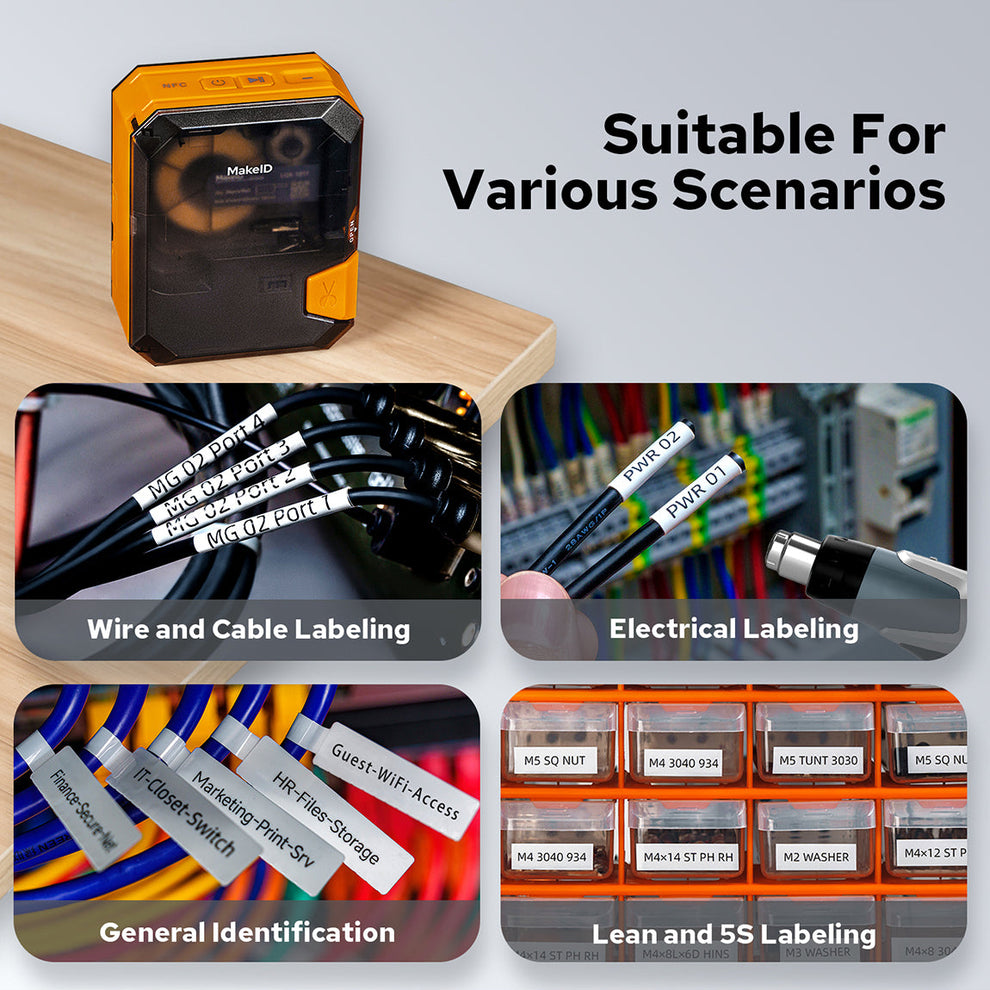
- MakeID P31S Thermal Transfer Label Printer - 300DPI Bluetooth Industrial Maker for Electrical Cable, Wire Tags & Heat Shrink Tubes
1. How They Work
Understanding the core technology helps explain why each printer excels where it does.
Thermal Transfer
Thermal transfer printers use a heated printhead to melt a wax or resin-based ribbon onto the label material. The ink becomes chemically bonded to the substrate.
Think of it as: Tattooing the label material with heat.
Inkjet
Inkjet printers spray microscopic droplets of liquid ink through tiny nozzles directly onto the label surface.
Think of it as: A highly precise, industrialized version of your standard office desktop printer.
2. Head-to-Head Comparison
Feature | Thermal Transfer | Inkjet |
Durability | Extreme (Resists chemicals, UV, heat, and abrasion) | Moderate (Can smudge or fade if exposed to harsh environments) |
Color Capabilities | Mostly monochrome (one color at a time) | Full, vibrant color capabilities |
Maintenance | Very low (Few moving parts, no ink to dry out) | High (Nozzles can clog if left idle) |
Best Label Material | Heat-shrink tubes, vinyl, polyester, nylon cloth | Specialized inkjet-receptive paper or matte plastic |
Portability | High (Many handheld/field options available) | Low (Mostly desktop or industrial inline units) |
3. When to Choose Thermal Transfer (The Field Champion)
If your cables are going anywhere near sunlight, moisture, oil, or physical friction, Thermal Transfer is the undisputed king. It is the industry standard for telecom, electrical, and data center environments for several reasons:
Unmatched Durability: When paired with resin ribbons and vinyl or poly materials, thermal transfer labels can withstand extreme temperatures, chemical washes, and years of UV exposure.
Specialized Cable Materials: Thermal transfer printers effortlessly print on heat-shrink tubing and self-laminating wire wraps (where a clear tail wraps over the printed text to protect it).
Field Reliability: Because they don't use liquid ink, there are no nozzles to clog. You can leave a thermal transfer printer in the back of a cold service truck for a month, take it out, and it will print perfectly on the first try.
Best For: Industrial electrical panels, outdoor cabling, data centers, heat-shrink wire identification, and high-abrasion environments.
4. When to Choose Inkjet (The Color Specialist)
While less common for standard field wire-mapping, Inkjet printers have a very specific superpower: high-resolution, multi-color printing.
Color-Coded Logic: If your infrastructure relies heavily on complex, color-coded visual management (e.g., matching the exact color of a category cable or adding a bright red "DANGER" logo), inkjet allows you to print custom colors on demand.
High-Resolution Graphics: Inkjet excels at printing incredibly crisp, multi-colored company logos, complex 2D data matrix codes, and detailed instructional graphics on a single label.
The Catch with Inkjet for Cables:
Liquid ink requires a porous surface to absorb into, or a specialized coating to bind to. Standard industrial cable materials like vinyl or nylon don't always take inkjet ink well without smudging. Furthermore, inkjet printers are rarely portable, making them strictly bench-top or office-bound solutions.
Best For: High-volume patch panel labeling in a controlled office environment, branding labels with corporate logos, and color-coded organizational systems.
Which One Should You Choose?
The choice comes down to Environment vs. Aesthetics.
Choose Thermal Transfer if: You need rugged, permanent, "set-it-and-forget-it" labels that can survive the elements, friction, and chemicals. If you are printing heat-shrink tubes or wrapping individual wires in the field, this is your only real choice.
Choose Inkjet if: You operate strictly indoors, require photo-quality color matching, want to print corporate branding directly onto your panel labels, and have a consistent daily print volume to keep the ink nozzles clean.
For 90% of dedicated cable and wire labeling applications, Thermal Transfer remains the safer, more durable, and more reliable investment.
Report this wiki page